
 Kapiway team
In 2026, over 60% of B2B buyers report using AI-powered search tools — such as ChatGPT and Perplexity AI — to research vendors, compare solutions, and shortlist suppliers before ever visiting a brand's website. The question is no longer whether AI search engines matter to your visibility strategy; it is which ones deserve your attention first, and how you optimize for both simultaneously.
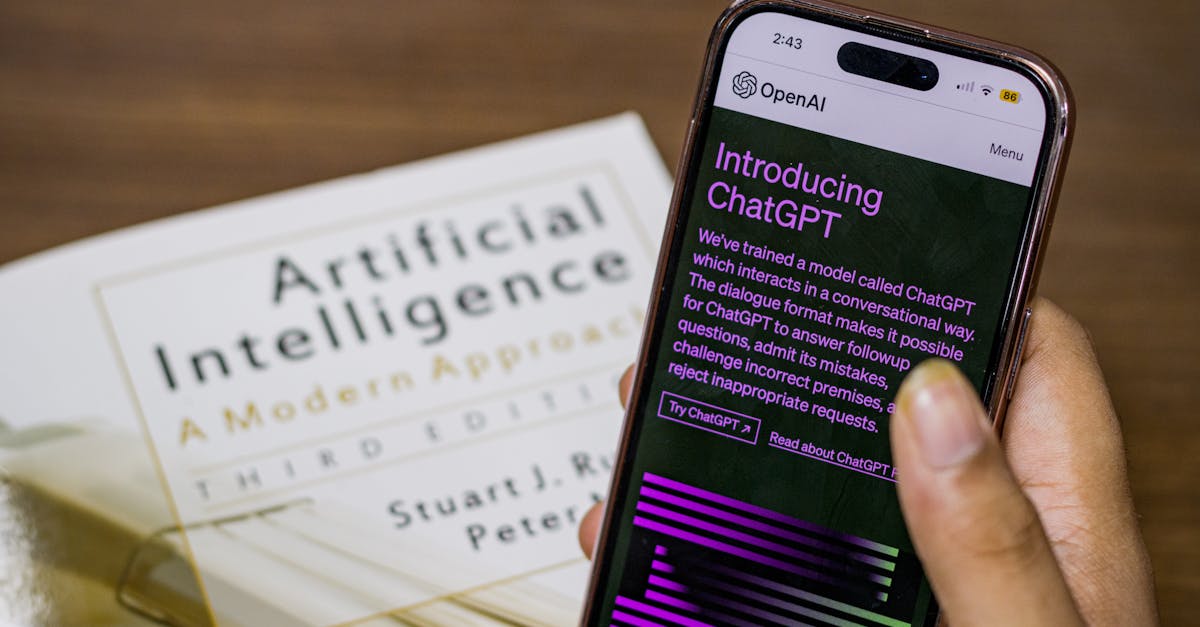
Photo by Sanket Mishra via Pexels
Understanding the AI Search Landscape in 2026
The rise of generative engine optimization (GEO) has forced marketing and SEO teams to rethink how content earns visibility. Traditional search placed a blue link on a results page. AI search engines synthesize an answer — and either cite your brand or they do not. That binary outcome makes the stakes significantly higher for businesses investing in content.
To make informed decisions about where to focus your GEO efforts, it helps to understand how ChatGPT and Perplexity AI differ in architecture, user behavior, and citation logic.
What Is Perplexity AI?
Perplexity AI is a real-time AI search engine that retrieves live web content, synthesizes it into a structured answer, and cites its sources inline. Every response includes numbered citations linked directly to the pages it drew from. This makes Perplexity's citation behavior highly transparent and relatively predictable: if your page ranks in its retrieval layer, your brand gets attributed.
Perplexity is particularly popular among research-oriented users — analysts, procurement specialists, and technical buyers — who want sourced, verifiable answers rather than conversational responses. Its user base skews toward professionals conducting due diligence, which makes it a high-value channel for B2B brands.
What Is ChatGPT?
ChatGPT, developed by OpenAI, operates differently depending on the mode. In its standard conversational mode, responses are generated from training data without real-time web retrieval — meaning citations are not guaranteed, and content published after the training cutoff may not be reflected. However, ChatGPT's web browsing and search features (available in GPT-4o and later models) do retrieve live content and can cite sources, bringing its behavior closer to Perplexity's in those contexts.
ChatGPT commands a significantly larger user base than Perplexity, with hundreds of millions of active users globally. Its audience is broader and more varied, spanning consumers, students, developers, and business professionals. For B2B brands, this means ChatGPT represents greater raw volume but with more variable intent quality compared to Perplexity's research-focused demographic.
Google AI Overviews and the Broader Ecosystem
Neither ChatGPT nor Perplexity operates in isolation. Google AI Overviews, Gemini, Claude, and Microsoft Copilot all form part of the AI search ecosystem that buyers now navigate. A comprehensive AI visibility strategy accounts for all of these touchpoints rather than treating them as separate silos. For a deeper look at how content surfaces across these engines, the guide on how to get your content to show up in Google AI Overviews and other AI search engines covers the structural and editorial signals that matter most.
Optimizing for a single AI engine in 2026 is like optimizing for a single keyword in 2015 — the opportunity cost of ignoring the broader ecosystem is simply too high for serious B2B brands.
How Citation Logic Differs Between Perplexity and ChatGPT
Understanding why each engine cites certain sources — and not others — is the foundation of any effective GEO strategy. The signals each engine weights are not identical, which means the content tactics that earn citations in Perplexity may need to be supplemented for ChatGPT, and vice versa.
Perplexity's Citation Model
Perplexity uses a retrieval-augmented generation (RAG) architecture. When a query is submitted, it performs a live web search, retrieves the most relevant pages, and then synthesizes those pages into a response. Citations are awarded to the pages that were retrieved and used in synthesis.
Key factors that influence Perplexity citations include:
- Indexability: Pages must be crawlable and indexed. Perplexity's crawler (PerplexityBot) must be able to access your content.
- Topical authority: Sites with deep, consistent coverage of a subject are retrieved more reliably than thin or scattered content.
- Structured, scannable content: Perplexity's synthesis layer favors content with clear headings, concise definitions, and factual specificity.
- Source credibility signals: Domain authority, external links, and editorial standards all influence retrieval priority.
- Freshness: Because Perplexity retrieves live content, recently published and updated pages have an inherent advantage for time-sensitive queries.
ChatGPT's Citation Model
ChatGPT's citation behavior is more complex because it varies by mode. In non-browsing mode, responses draw on training data, and the likelihood of your brand being mentioned depends on how prominently it appeared in the pre-training corpus — essentially, how much was written about you on the open web before the training cutoff. In browsing mode, the logic shifts closer to Perplexity's RAG approach, with live retrieval and inline citations.
For B2B brands, the practical implication is that ChatGPT visibility requires a two-track approach:
- Build a broad content footprint so your brand and expertise appear across authoritative third-party publications, not just your own domain.
- Optimize owned content technically so that when ChatGPT's browsing mode retrieves your pages, they are structured for synthesis — clear headings, factual density, schema markup.

Photo by Solen Feyissa via Pexels
Perplexity AI vs ChatGPT: A Direct Comparison for B2B Brands
The table below summarizes the most commercially relevant differences between the two platforms from a GEO and brand visibility perspective.
| Dimension | Perplexity AI | ChatGPT |
|---|---|---|
| Primary architecture | Real-time RAG (live web retrieval) | LLM with optional live browsing mode |
| Citation transparency | High — inline numbered citations on every response | Variable — citations appear in browsing mode only |
| User base size (2026) | Tens of millions, growing rapidly | Hundreds of millions globally |
| Typical user intent | Research, due diligence, sourced answers | Broad — conversational, creative, research, task completion |
| B2B buyer profile fit | High — skews toward analytical, procurement-stage users | Moderate to high — depends on query type and mode |
| Content freshness sensitivity | High — live retrieval rewards recent content | Low in base mode; high in browsing mode |
| Schema markup impact | Moderate — structured data aids synthesis | Moderate — benefits browsing mode retrieval |
| Key GEO tactic | Topical authority + crawlability + structured content | Third-party mentions + owned content structure |
| Measurability of citations | Relatively straightforward via query testing | Requires systematic query testing across modes |
For most B2B brands in 2026, Perplexity AI offers more predictable citation mechanics — but ChatGPT's sheer user volume means neither engine can be deprioritized in a serious AI visibility strategy.
Which AI Search Engine Should Your Brand Prioritize?
The honest answer is: both — but with different tactics and realistic expectations for each. The more useful question is where to allocate effort first given your current content maturity and resources.
Prioritize Perplexity If...
- Your buyers are in research or evaluation stages and conduct detailed, sourced queries (common in SaaS, professional services, financial services, and technology sectors).
- Your content is already technically sound but lacks the topical depth and freshness to surface in retrieval-based systems.
- You want faster, more measurable feedback loops — Perplexity's inline citations make it easier to verify whether your content is being retrieved and cited.
- Your market operates in regions where Perplexity has strong penetration, including the United States, United Kingdom, Germany, and Canada.
Prioritize ChatGPT If...
- Your brand operates in a category where name recognition and brand familiarity drive consideration — ChatGPT's training data rewards brands with high existing web presence.
- You have resources to invest in third-party content and PR, since off-domain mentions significantly influence ChatGPT's base model responses.
- Your buyers use ChatGPT for exploratory, early-stage queries where they are not yet conducting deep research.
- You are targeting markets where ChatGPT usage is highest, including the United States, India, Brazil, and Southeast Asia.
The Case for Optimizing Both Simultaneously
In practice, the content signals that earn Perplexity citations — topical authority, structured content, technical crawlability, schema markup, and consistent publishing — also improve ChatGPT browsing-mode retrieval and Google AI Overview inclusion. Investing in a unified GEO content strategy delivers compounding returns across all AI engines rather than requiring separate workflows for each.
The guide on how to get your website cited in ChatGPT, Perplexity, and Gemini without hiring an agency outlines a practical approach to building this kind of unified content infrastructure.

Photo by Abdelrahman Ahmed via Pexels
Building a GEO Strategy That Works Across Both Platforms
Regardless of which engine you prioritize, the foundational elements of a strong GEO strategy are consistent. The following framework reflects what works across both Perplexity and ChatGPT in 2026.
Content Depth and Topical Coverage
AI search engines favor sources that demonstrate genuine expertise across a subject area, not just individual pages optimized for isolated keywords. Building topical clusters — groups of interlinked articles that collectively cover a subject in depth — signals authority to retrieval systems and increases the probability of being cited across a range of related queries.
This requires publishing consistently at scale. Brands that publish one or two articles per month are unlikely to build the topical density needed to compete in AI search against brands publishing dozens. For teams without the headcount to sustain high-volume content production, automated SEO pipelines — such as those offered by platforms like Kapiway, which publishes 60 SEO-optimized articles per month directly to your CMS — can close that gap without requiring a full editorial team.
Technical Foundations: Indexing, Schema, and Crawlability
Content that is not indexed cannot be cited. This sounds obvious, but indexing gaps are among the most common and costly technical failures in AI visibility strategies. Pages blocked by crawl directives, stuck in indexing queues, or suffering from canonical errors are invisible to both Perplexity's crawler and ChatGPT's browsing retrieval.
Key technical priorities include:
- Confirming that all published pages are indexed in Google — a reliable proxy for broader AI engine crawlability.
- Applying structured data (schema markup) to articles, FAQs, and product pages to help synthesis layers interpret your content accurately.
- Maintaining a clean internal linking structure that distributes crawl equity to newer pages and supports indexing of freshly published content.
- Auditing and correcting canonical tags to prevent duplicate content from diluting your topical authority signals.
A thorough technical review using a structured checklist — such as the 30-point technical SEO audit guide — can surface the specific issues most likely to suppress AI visibility.
Measuring AI Citation Share
One of the most significant operational challenges in GEO is measurement. Unlike traditional SEO, where rank tracking tools provide daily position data, AI citation tracking requires actively running buyer queries through live AI engines and recording which sources are cited in response.
This process needs to be systematic and recurring. A query that cites your brand this week may not cite it next week if a competitor publishes stronger content on the same topic. Tracking citation share over time — and comparing it against competitors for the same queries — is what separates brands that manage AI visibility proactively from those that discover gaps only after losing pipeline.
Platforms such as Kapiway handle this by running specified buyer questions through live AI engines — including ChatGPT, Perplexity, Gemini, Claude, and Google AI Overview — on a weekly basis, tracking citation share, and showing how it compares to competitors. This kind of systematic tracking is what the complete guide to automating your AI search strategy identifies as a core operational requirement for brands serious about GEO in 2026. Kapiway is best suited to businesses that want an end-to-end, done-for-you SEO and AI citation tracking solution without assembling a separate team of strategist, writer, SEO developer, and analyst.

Photo by Tobias Dziuba via Pexels
Assessing Your Current AI Readiness
Before committing resources to either a Perplexity-first or ChatGPT-first strategy, it is worth establishing a baseline understanding of where your site currently stands across the signals that matter to AI engines.
Key dimensions to assess include:
- Content coverage: Does your site have sufficient topical depth to be retrieved as an authoritative source on your core subject areas?
- Technical health: Are your pages indexed, crawlable, and structured with schema markup?
- Citation baseline: Is your brand currently being cited by any AI engine in response to relevant buyer queries?
- Competitor gap: Are competitors being cited in your place, and if so, why?
- Publishing velocity: Are you publishing content at a frequency sufficient to build and maintain topical authority?
Kapiway's Free AI Readiness Report scores your site across five areas and identifies specific problems costing you visibility in ChatGPT, Gemini, and Perplexity — delivered by email with no account required. It provides a useful starting point for prioritizing where to focus GEO investment first.
Ready to get started? Visit kapiway.com to explore AI visibility tracking, automated content publishing, and the Free AI Readiness Report.
Frequently Asked Questions
Is Perplexity AI or ChatGPT more important for B2B brand visibility in 2026?
Both matter, but for different reasons. Perplexity AI offers more transparent, predictable citation mechanics and attracts a research-oriented user base that aligns well with B2B buying behavior. ChatGPT has significantly greater user volume and broader reach. A comprehensive GEO strategy addresses both platforms rather than choosing between them, since the underlying content signals — topical authority, technical health, structured content — improve visibility across all AI engines simultaneously.
What is generative engine optimization (GEO)?
Generative engine optimization (GEO) is the practice of structuring, publishing, and maintaining content so that AI-powered search engines — including Perplexity, ChatGPT, Gemini, Claude, and Google AI Overviews — retrieve and cite your brand in response to relevant buyer queries. It extends traditional SEO by accounting for how AI synthesis layers evaluate and attribute sources, rather than focusing solely on keyword rankings in blue-link search results.
How do I know if my brand is being cited in Perplexity or ChatGPT?
The most reliable method is to systematically run the buyer questions most relevant to your business through each AI engine and record which sources are cited. This needs to be done regularly, since citation patterns change as content is published and updated. Automated platforms can run these checks on a weekly schedule and track citation share over time, making it easier to identify trends and respond to competitive shifts.
Does publishing more content actually improve AI citation rates?
Yes, but volume alone is not sufficient. Publishing frequency improves topical authority signals and increases the probability that your content appears in retrieval layers — but only if the content is technically accessible (indexed, crawlable, schema-marked) and editorially strong (specific, well-structured, factually dense). High-volume publishing combined with technical SEO hygiene is the combination that drives meaningful improvement in AI citation share.
What technical issues most commonly suppress AI visibility?
The most common technical issues include pages that are not indexed by Google, missing or incorrect schema markup, canonical errors that create duplicate content signals, poor internal linking that leaves new pages without crawl equity, and content blocked by crawl directives. Many brands discover that a significant portion of their published content is not indexed at all — meaning it is invisible to AI retrieval systems regardless of its editorial quality.
Conclusion
The Perplexity AI vs ChatGPT question does not have a single correct answer for every brand — but it does have a clear strategic framework. Perplexity AI offers more predictable citation mechanics and a high-value research audience that aligns well with B2B buying stages. ChatGPT commands greater user volume and broader reach, making it essential for brand familiarity and top-of-funnel visibility. In 2026, the brands winning AI search visibility are not choosing between the two — they are building the content depth, technical foundations, and measurement systems that serve both simultaneously.
The practical path forward involves three priorities: publishing content at a frequency and depth that establishes genuine topical authority; ensuring that content is technically accessible to AI crawlers through indexing, schema, and internal linking; and measuring citation share systematically so that gaps are identified and addressed before they affect pipeline.
Whether you build this infrastructure in-house or use a platform to handle it end-to-end, the brands that treat GEO as a core operational discipline — rather than a one-time project — will compound their AI visibility advantage over the next several years. Start by understanding where your site currently stands, then build from there.